Staying in a yurt in Kyrgyzstan is one of the most memorable parts of travelling through the country. Set high in the mountains or surrounded by wide‑open landscapes and grazing horses, yurt stays offer a rare chance to experience traditional nomadic life in a way that still feels authentic today.
If you’ve never stayed in a yurt before, you probably have a few questions like… Are yurts comfortable? How cold does it get at night? What are the toilets like? And is it actually worth it?
For those wanting to turn to experience nomadic life, our Discover Kyrgyzstan group adventure includes local nomadic yurt stays.
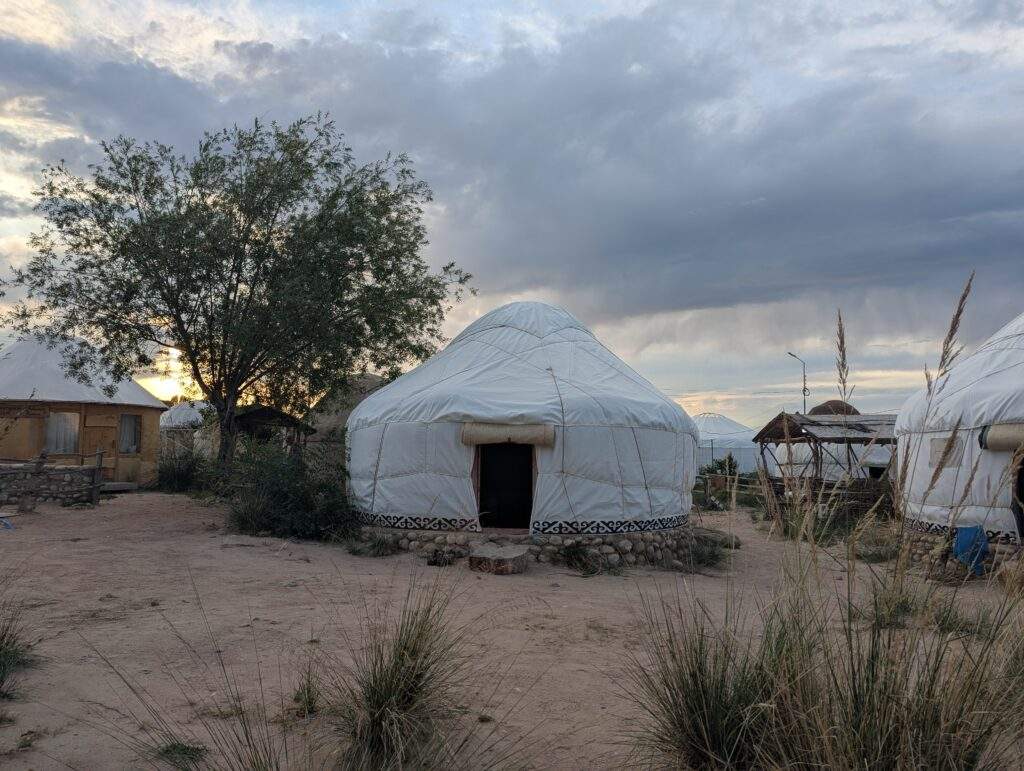
What Is a Yurt?
A yurt is a traditional circular tent made from a wooden frame and thick felt coverings – find out more here. For centuries, yurts have been used by nomadic families across Central Asia, designed to be warm, sturdy and easy to dismantle as people move with their livestock.
In Kyrgyzstan, yurts are still very much part of everyday life. During the summer months, families move to high‑altitude pastures known as jailoo, where they live in yurts while grazing horses, sheep and cattle. Staying in a yurt isn’t a re‑creation just for tourists – it’s a glimpse into a way of life that continues today.
Where Are Yurt Camps Located in Kyrgyzstan?
Most yurt camps in Kyrgyzstan are located in remote, high‑altitude regions, often between 2,500 and 3,000 metres above sea level. Some of the most well‑known areas include Song‑Kul Lake and the surrounding mountain pastures, where nomadic families spend the summer months.
These locations are far from cities and towns, which is exactly what makes staying in a yurt so special. Expect vast open landscapes, mountain views in every direction and an incredible sense of peace and isolation.
Yurt stays are typically seasonal, operating from late spring to early autumn, when mountain passes are open and families have moved to the jailoo.

Is Staying in a Yurt Comfortable?
One of the most common questions people ask is whether yurts are actually comfortable. While yurts are simple, they are more comfortable than many people expect.
Inside, yurts are usually carpeted and fitted with thick mattresses laid out on the floor. Bedding is provided, and the felt walls offer surprisingly good insulation. Many yurts also have a small wood‑burning stove, which helps keep the space warm in the evenings and early mornings.
While this isn’t luxury accommodation, it is cosy, warm and thoughtfully set up – and after a day exploring the mountains, most travellers sleep well.
How Cold Is It Sleeping in a Yurt?
Even during summer, nights in Kyrgyzstan’s mountains can be cold. At places like Song‑Kul, temperatures can drop close to freezing at night, even in July and August.
The combination of thick felt walls, carpets and bedding helps retain warmth in yurts. However, it’s important to come prepared – warm layers for the evening and sleeping make a big difference and will help make your stay more comfortable.
Before planning your trip, read our Best Time to Visit Kyrgyzstan guide.
Do Yurt Camps Have Toilets and Showers?
Facilities at yurt camps are basic, but generally clean and well maintained. Toilets are usually located outside and can be quite simple. Washing facilities tend to be limited to a shared washing area and often use cold water.
Hot showers are rare in remote yurt camps, so this is something to be aware of before arriving. Although, after a day in the fresh mountain air, this simplicity is part of the experience rather than a drawback.
What Is the Food Like in a Yurt Camp?
Meals at yurt camps are typically home‑cooked and shared communally, often with the host family or other travellers. Food is hearty, filling and rooted in Kyrgyz nomadic traditions!
You can expect dishes such as soups, dumplings, rice, noodles, fresh bread, jams and endless cups of tea. Meals are usually eaten sitting together around a low table, creating a warm atmosphere and social environment.
Can Vegetarians Eat at Yurt Camps?
Kyrgyz cuisine is traditionally meat‑based, and options can be limited in remote areas. However, with advance notice, many guesthouses and yurt camps can adapt meals slightly, offering vegetable‑based soups, rice dishes or eggs.
It’s important to approach this with realistic expectations and some flexibility, especially in very remote regions.
Is There Electricity or Phone Signal in Yurt Camps?
Electricity in yurt camps is usually limited. Some camps use small solar panels or generators to provide light in the evenings, but power is often switched off overnight. Charging facilities may be shared and limited.
Phone signal and mobile data can be weak or completely unavailable, depending on location. While this can feel daunting at first, most travellers find that disconnecting from their phones becomes one of the most refreshing parts of the experience!
What Is Daily Life Like in a Yurt Camp?
A nomadic life follows a slow, natural rhythm. Mornings often begin with the sound of animals grazing nearby and fresh tea being prepared. During the day, you’ll see horses roaming freely, families tending to livestock, and children helping with daily tasks.
There’s a strong sense of connection to the land, and time feels unhurried. Sitting outside a yurt, watching the light change over the mountains, is often what people remember most long after the trip is over.
Is It Safe to Stay in a Yurt in Kyrgyzstan?
Staying in a yurt in Kyrgyzstan is generally very safe. Yurt camps are family‑run and hosts are known for their warmth and hospitality. Safety concerns are rarely about crime and are more related to practical factors such as weather changes, altitude and remote locations.
Travelling with experienced local guides and allowing time to acclimatise at altitude helps ensure a safe and comfortable experience.
What Should You Pack for a Yurt Stay?
Packing appropriately makes a big difference to your comfort. Key items to bring include warm layers, a waterproof jacket, comfortable walking shoes, a torch or headlamp, a power bank and personal toiletries.
Some people also choose to bring a sleeping bag liner for extra warmth and comfort. Wet wipes and hand sanitiser can also be useful due to limited washing facilities.
Cultural Etiquette When Staying in a Yurt
A little cultural awareness goes a long way. Shoes are usually removed before entering a yurt, and you’ll often be offered tea as a sign of welcome. Accepting hospitality politely is appreciated, and it’s always best to ask before photographing people or private family spaces. Respecting local customs helps create positive, meaningful interactions with your hosts.
Want to Experience Nomadic Life in Kyrgyzstan?
Staying in a yurt is often one of the highlights of a trip to Kyrgyzstan. It offers a rare opportunity to slow down, connect with local culture and experience the country’s landscapes in their most authentic form. It may be simple, but it’s a unique and memorable experience!
On our Discover Kyrgyzstan tour, you’ll stay in traditional yurt camps near Song‑Kul, giving you the chance to experience nomadic life while travelling comfortably through some of the country’s most spectacular landscapes.